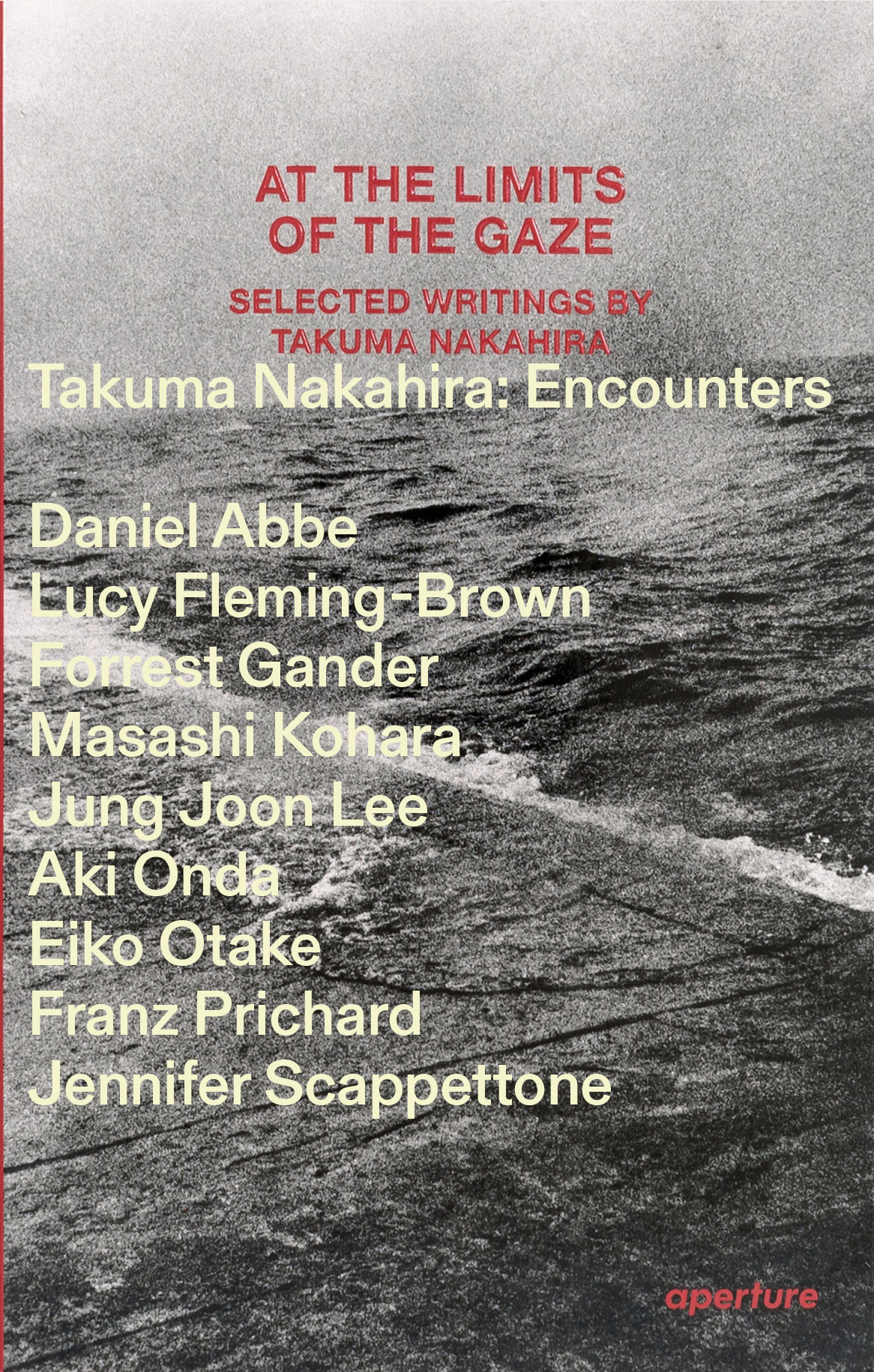
Daniel Abbe is an Adjunct Assistant Professor at Temple University, Japan Campus Kyoto; he also lectures at Osaka University of Arts. He has written on art and photography for Aperture, Japan Forum and X-TRA in English, and for Tokyo Art Beat, Bijutsu Techō and Popeye Web in Japanese. In addition to his work on the translation of At the Limits of the Gaze, he also regularly translates materials related to the archive of the photographer Ōtsuji Kiyoji.
Lucy Fleming-Brown is an independent researcher based in London. She completed an MA at Tokyo University of the Arts exploring Nakahira Takuma’s engagement with the Ryukyu archipelago. Fleming-Brown is currently engaged in programing for Graces Mews Gallery, lecturing at Camberwell College of Art, and researching Okinawan photography and film as part of a team supported by the Getty Foundation’s Connecting Art Histories initiative.
Forrest Gander, a writer and translator with degrees in geology and literature, was born in the Mojave Desert and lives in northern California. His books, often concerned with ecology, include Mojave Ghost, Be With, winner of the Pulitzer Prize, and the desert novel The Trace. Gander’s Japanese co-translations include Alice, Iris, Red Horse: Poems by Gozo Yoshimasu, Spectacle & Pigsty by Kiwao Nomura (Best Translated Book Award), and Names and Rivers by Shuri Kido. He’s also translated fifteen books from Spanish language poets.
Masashi Kohara is a curator and filmmaker. His documentary films include The Man Who Became a Camera (2003), about photographer Takuma Nakahira. As a researcher at the Izu Photo Museum, Kohara organized "Nobuyoshi Araki Photobook Exhibition: Ararchy," "Manabu Miyazaki: The Pencil of Nature," "Tazuko Masuyama: Until Everything Becomes a Photograph" and "Ichiro Kojima: To the North, From the North," among others. He is the author (or co-author) of Suspending Time: Life –Photography – Death, Visions of Fuji: An Incurable Malady of Modern Japan, War and Postwar: Images of Japan As Seen in Hodo Shashin (Reportage Photography), and Detective in the Forest, among others.
Jung Joon Lee is an associate professor of the history of photography and contemporary art at the Rhode Island School of Design. Her book, Shooting for Change: Korean Photography after the War (Duke University Press, 2024) treats Korea’s transnational militarism as a lens through which to examine how photography makes meaning and shapes history. Lee is currently writing a book about photography and art exhibitions as spaces of transoceanic collaboration, kinship making, and repair.
Aki Onda is an artist, composer, and curator. His musical and visual works are often catalyzed by and structured around memories—personal, collective, historical—such as his widely-known project "Cassette Memories", drawn from three decades of field recordings (or, as Onda refers to them, ‘sound diaries’). His artistic collaborators include Michael Snow, Ken Jacobs, Paul Clipson, Ho Tzu Nyen, Raha Raissnia, Loren Connors, Alan Licht, David Toop, and Akio Suzuki. Onda have presented their work at The Kitchen, MoMA, MoMA P.S.1, Blank Forms, REDCAT, Toronto Biennual of Art, documenta 14, Louvre Museum, Pompidou Center, Palais de Tokyo, Fondation Cartier, Argos, Bozar, ICA London, International Film Festival Rotterdam, Nam June Paik Art Center, Seoul Mediacity Biennale, among other institutions. After residing in New York for many years, he currently lives and works in Mito, Japan.
Born and raised in Japan and a resident of New York since 1976, Eiko Otake is a movement-based, interdisciplinary artist. From 1972–2013, she worked exclusively as Eiko & Koma performing their own choreography, earning awards from MacArthur, United States Artists, American Dance Festival, Dance Magazine, and the first Doris Duke Artist Award. Since 2014, Eiko has been directing her own projects. A series of site-specific solo work, A Body in Places, became the subject of her 2016 Danspace Platform that brought her a Special Bessies Citation, an Art Matters and the Anonymous Was a Woman award. A Body in Fukushima brought Eiko and historian/photographer William Johnston repeatedly to Japan's irradiated landscape, producing presentations, exhibitions, films, and a book. In the Duet Project, (2017-), Eiko collaborates with Ishmael Houston-Jones, Joan Jonas, DonChristian Jones, Iris McCloughan, Beverly McIver, and Mérian Soto. I Invited Myself (2022-) presents exhibitions and screenings of her media works. www.eikootake.org
Franz Prichard is associate professor of Japanese Studies at Florida State University. His interdisciplinary research and teaching explore the literature, environmental thought, and visual media of contemporary Japan. He is the author of Residual Futures: The Urban Ecologies of Literary and Visual Media of 1960s and 1970s Japan (Columbia University Press, 2019). His current research develops transcultural and ecocritical approaches to the study of contemporary Japanese literature, photography, and other visual media.
Jennifer Scappettone works at the confluence of the literary, visual, translational, and scholarly arts, and teaches at the University of Chicago, where she directs the Environmental Arts + Humanities Lab. She is the author of five full-length books, including Poetry After Barbarism: The Invention of Motherless Tongues and Resistance to Fascism, The Republic of Exit 43, a cross-genre documentary of two New York landfills, and From Dame Quickly. Her translations and critical work surrounding Amelia Rosselli, a polyglot refugee from Fascist Italy, won the Academy of American Poets’ Raiziss/De Palchi Book Award. She has collaborated with musicians, architects, and dancers to sound counter-histories of sites ranging from a tract of Trajan’s aqueduct on Rome’s Janiculum Hill to Michigan’s Quincy Copper Mine, and her visual poetry has been installed and performed at venues ranging from the Kunstverein München to the Newhouse Center for Contemporary Art. Her chapbooks include SMOKEPENNY LYRICHORD HEAVENBRED: 2 Acts, featuring librettos for mixed-reality performance with Judd Morrissey and Ava Aviva Avnisan, and as curating poet, with Etel Adnan and Lyn Hejinian, Belladonna Elders Series #5: Poetry, Landscape, Apocalypse.