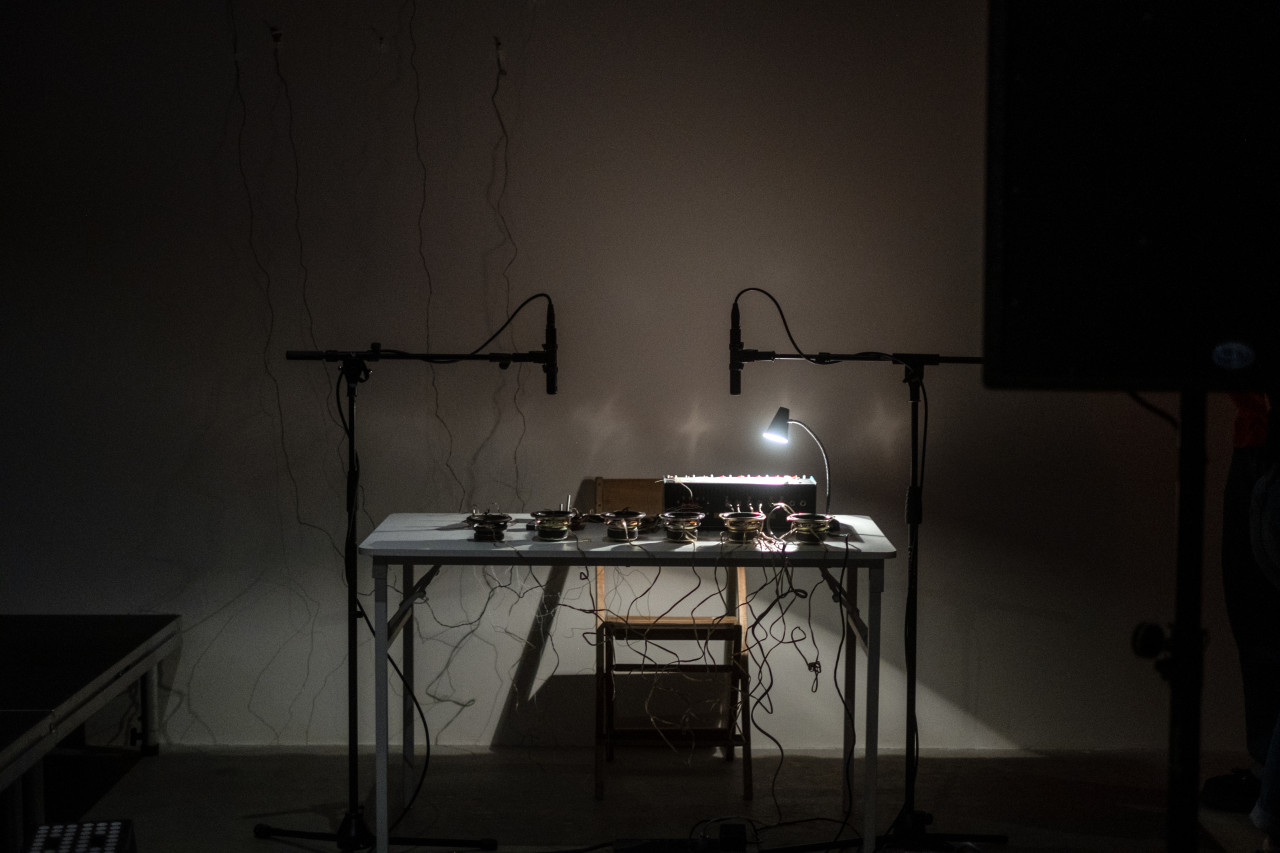
Memorial
January 18, 2026, 4pm
Please join the close friends of Yasunao Tone (1935–2025) for a special memorial celebrating his extraordinary life and work. The afternoon will feature performances and remarks by Lary 7, Bob Bellerue, Christophe Cherix, Mark Fell, Shuzo Azuchi Gulliver, Barbara Held, Shelley Hirsch, Florian Hecker, and Russell Haswell, Lawrence Kumpf, Christian Marclay, David Meschter, Barbara Moore, Zeena Parkins, SCRAAATCH, Reiko Tomii, Keiko Uenishi, David Watson, C. Spencer Yeh with Kwami Winfield, and John Zorn with Ikue Mori.
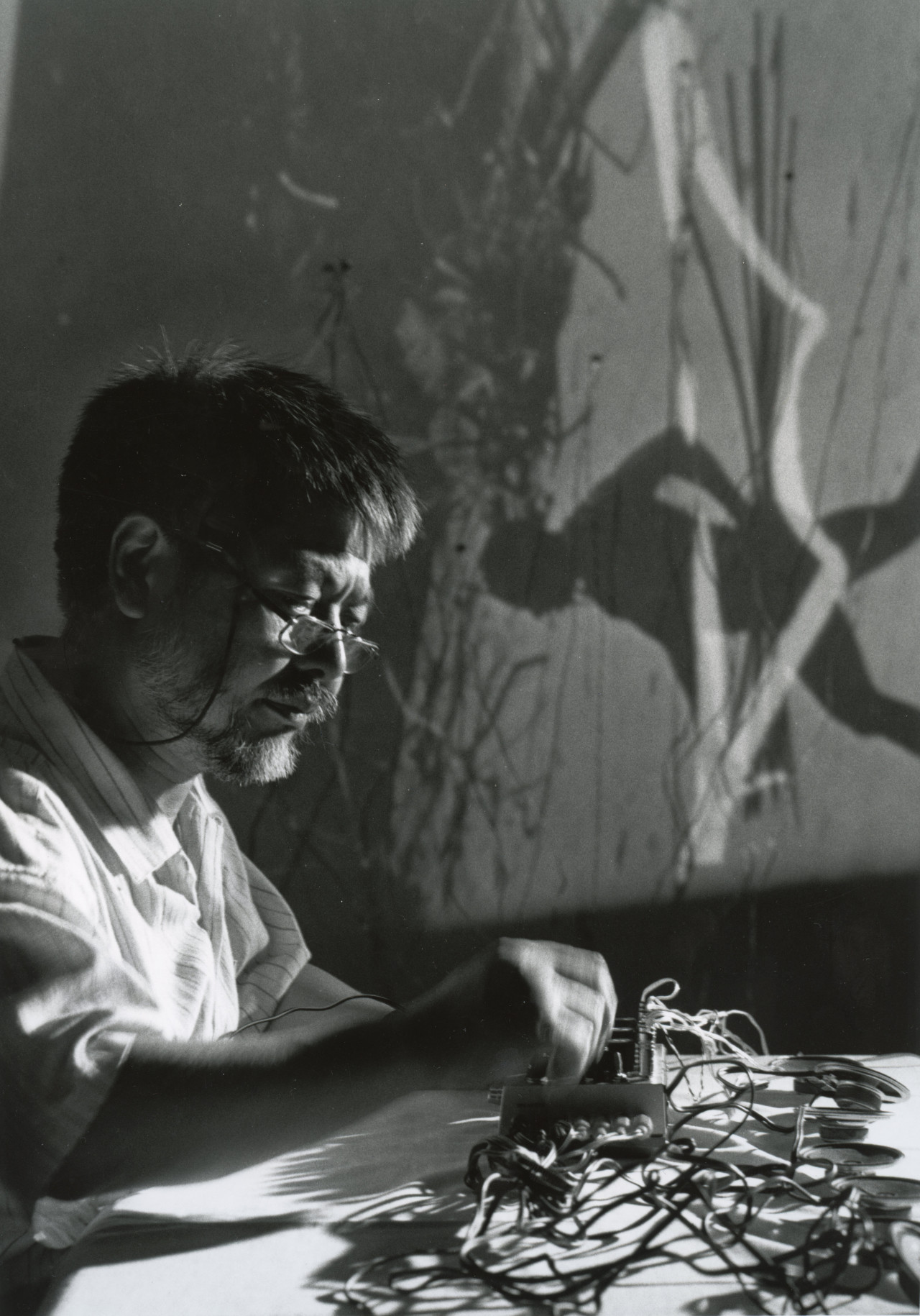
“To fight with smart machines, you have to be very primitive.”
—Yasunao Tone
Born in Tokyo in 1935, Yasunao Tone was a radical, multidisciplinary artist who became a central figure in New York’s avant-garde scene. He graduated from Chiba University in 1957 with a degree in Japanese literature and emerged as a pivotal figure in postwar Japanese art during the 1960s. Tone was a key member of Group Ongaku, Team Random, and the Japanese branch of Fluxus, collaborating with collectives and artists including the Neo-Dada Organizers, Hi-Red Center, and Butoh founder Tatsumi Hijikata. After relocating to the United States in 1972, Tone helped shape the philosophical and material development of durational art across performance, music, and multimedia. He collaborated with dancers, visual artists, and musicians such as Merce Cunningham, Blondell Cummings, Allan Kaprow, Senga Nengudi, Butch Morris, and George Maciunas.
Tone’s work was defined by radical transformations of media into unpredictable forms, using both analog and digital systems. Beginning in the mid-1980s, most notably with Music for 2 CD Players (1985), he physically altered CDs to override error-correction systems, producing unpredictable playback—a hallmark of his experimental ethos. Later works, including MP3 Deviation (2007) and AI Deviation (2015), extended this approach by manipulating corrupted sound files at different speeds to explore media’s unpredictable potential. His fourteen-year Musicia Simulacra project, released in 2011 and partially on CD-ROM, sonified the Man’yōshū, the oldest existing collection of Japanese poetry, blending technology, vibration, and literary translation in a deeply philosophical undertaking. Tone described these interventions as paramedia, a term for his method of repurposing technological devices to “create pieces that are simultaneously multipliable and nonrepetitive.” Across his career, Tone consistently challenged conventional artistic forms, genres, and social expectations, remaining committed to experimentation and discovery.